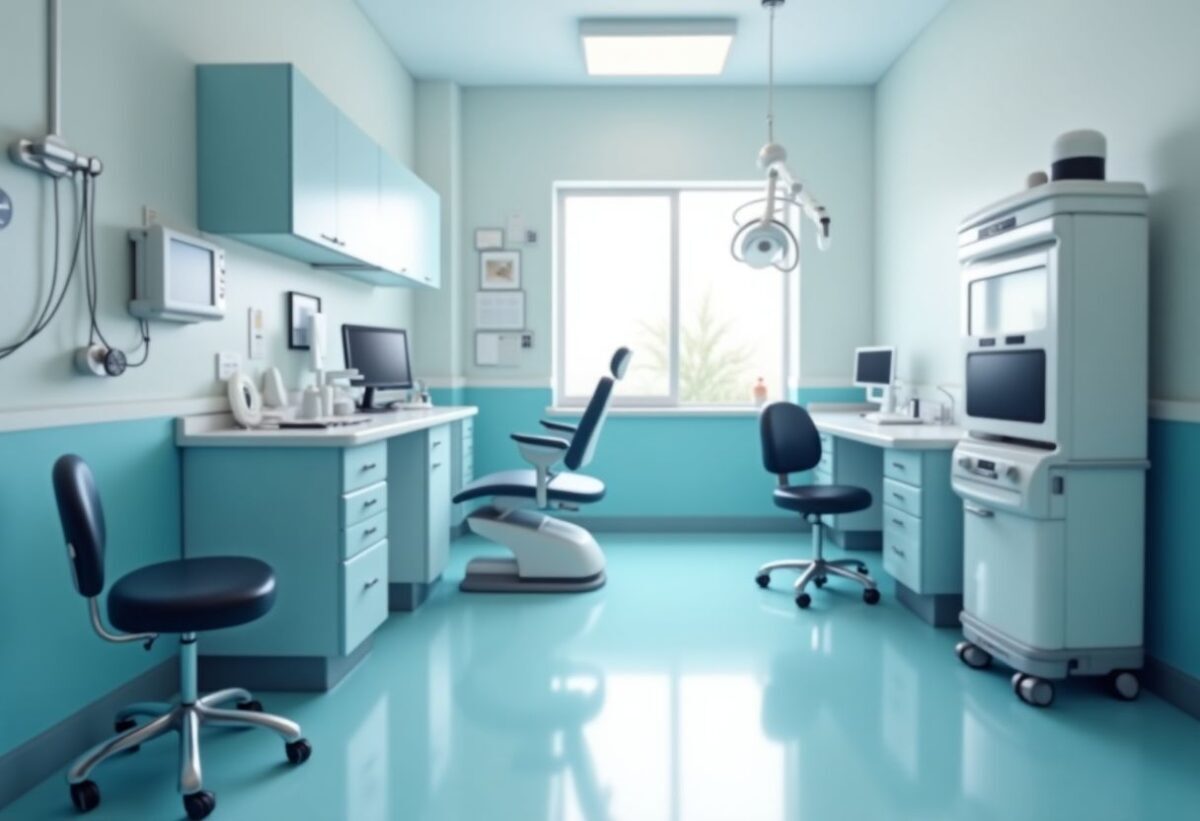
The choice of medical equipment determines the ability of healthcare professionals to effectively diagnose and treat their patients. Each component, from the examination table to diagnostic tools, directly influences the effectiveness of care.
In the face of constant evolution in medical technologies, it is imperative for any practice to equip itself with tools suited to its specific needs to ensure optimal service.
Diagnostic equipment: the heart of the medical practice
Diagnostic tools are the cornerstone of any medical practice. They allow doctors to identify diseases and propose appropriate treatments.
Among these tools are stethoscopes, thermometers, otoscopes, and sphygmomanometers, which are essential basic instruments for assessing a patient’s general health status.
A stethoscope, for example, is crucial for listening to internal bodily sounds, while an otoscope is essential for examining the ears and identifying infections or other abnormalities.
The sphygmomanometers, on the other hand, measure blood pressure and help detect cardiovascular diseases.
Every practice must have these tools at its disposal for effective and quick diagnosis.
Medical furniture: comfort and functionality
A medical practice cannot function without appropriate furniture that combines comfort and functionality for both patients and healthcare professionals.
- Examination table: An essential element that must be ergonomic and easily adjustable to accommodate all patient body types.
- Chairs and armchairs: Must provide optimal comfort for waiting patients and their companions during consultations.
- Storage: Shelves and cabinets that allow for organized and secure storage of medical equipment.
This furniture is chosen not only for its practical utility but also to create a welcoming and calming environment, thus contributing to the patient’s well-being.
Sterilization and hygiene devices: a guarantee of safety
To ensure the sanitary safety of patients and staff, sterilization devices are essential in a medical practice.
- Autoclaves: They allow for the sterilization of medical instruments using high-pressure steam, thereby eliminating any possible contamination.
- UV sterilizers: Used to disinfect surfaces and certain heat-sensitive equipment, adding an extra layer of safety.
Hygiene is an absolute priority in a medical context, and these devices ensure a germ-free and bacteria-free environment, thus protecting patients’ health.
Technology and innovation in the service of the medical practice
Technology continues to transform the medical landscape, and it is essential for a practice to equip itself with recent innovations to improve its services.
Digital tools such as patient management systems, electronic medical records, and telemedicine solutions are now indispensable.
These technologies allow for better information management, facilitate communication among healthcare professionals, and enhance the patient experience.
Moreover, the integration of devices such as medical practice equipment contributes to the efficiency of care and the continuous improvement of medical practices.