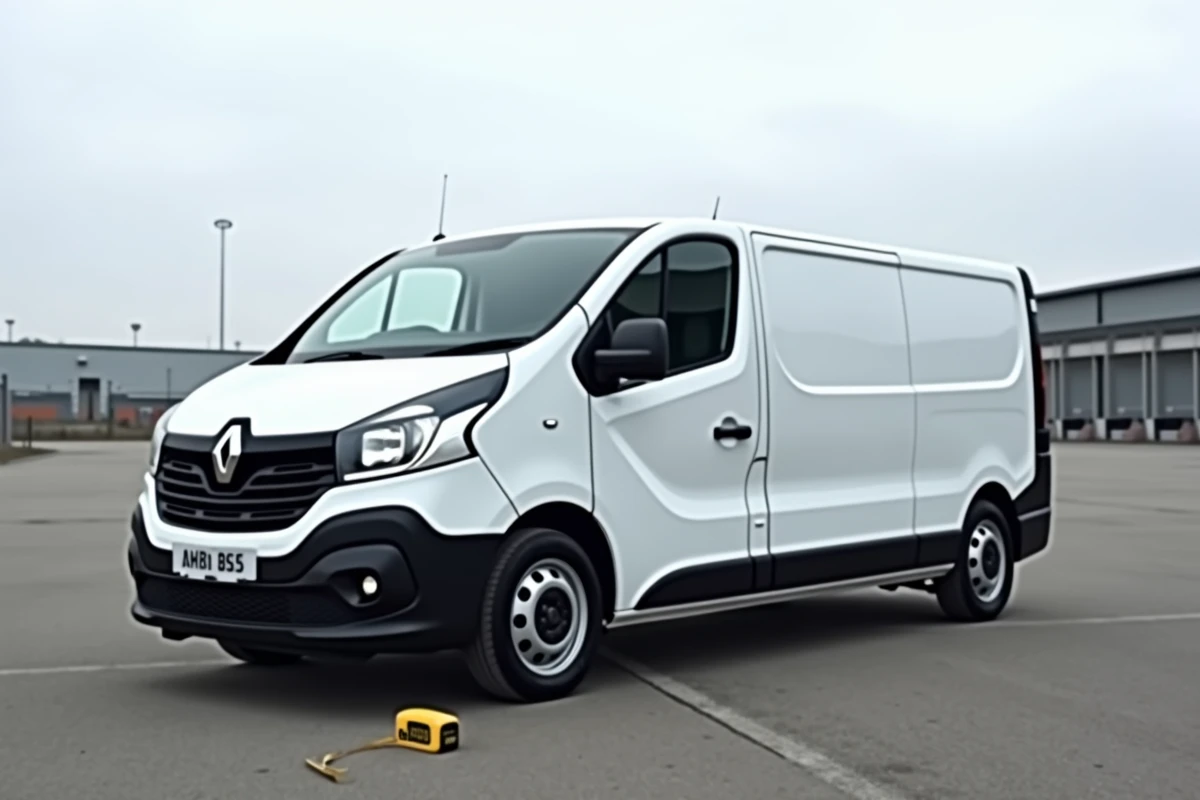
The Renault Trafic L2H1 remains the reference format for professionals who want to maximize loading volume without sacrificing accessibility in urban areas. Its combination of extended length and low roof directly influences the type of furniture, insulation, and sleeping arrangements that can be integrated.
Interior Dimensions of the Trafic L2H1 and Installation Constraints
The loading area of the Trafic L2H1 offers a significantly greater usable floor length than the L1, while maintaining a low interior height that limits height adjustments. The rear wheel arch, often underestimated, reduces the usable width on the floor in the rear third of the vehicle.
We recommend measuring three dimensions before any furniture design: the width between wheel arches, the free height under the lowest point of the roof (curved area above the rear doors), and the actual length to the back of the front seats. These three values determine whether a fixed transverse bed, a column unit, or a technical insulation floor is compatible with the dimensions.
The H1 variant imposes a clear trade-off between roof insulation and seat height. Every centimeter taken up by rigid insulation on the ceiling comes at the cost of living comfort inside. This is why experienced converters prefer thin multi-layer insulations or sprayed cork, which take up less headroom than traditional wood wool.
A detailed guide outlining the dimensions of the Trafic L2H1 for conversion allows for cross-referencing each manufacturer’s dimension with the actual thicknesses of common materials, preventing layout errors during the cutting phase.
Trafic L2H1: Insulation Thickness and Usable Residual Height
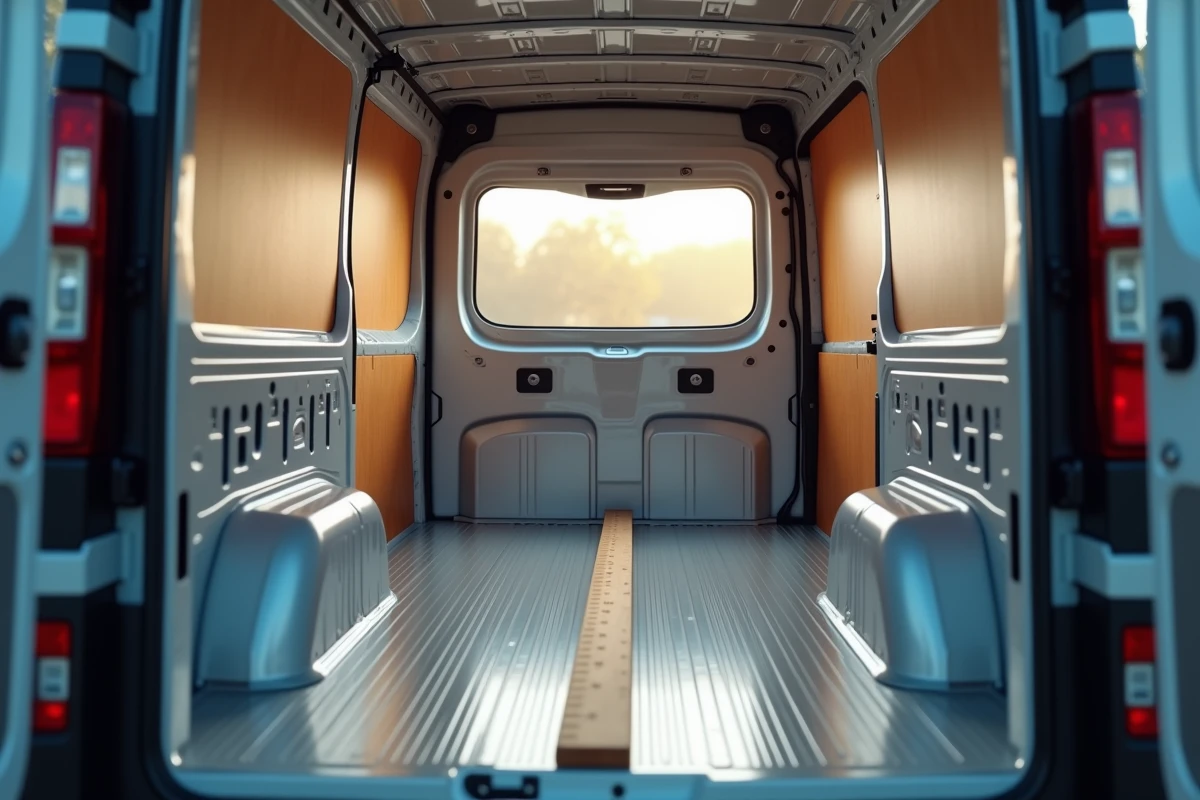
The real technical issue with an H1 is not the floor area, but the compromise between thermal performance and living space. A wall lining of a few centimeters in Armaflex, for example, retains more width than a glass wool sandwich with battens, which can easily consume double the thickness on each side.
At the roof, the curvature of the sheet metal creates a central high zone and two lower lateral zones. The insulation must follow this shape, complicating the installation of rigid panels. Flexible or sprayed solutions adapt better to this geometry and reduce thermal bridges at the sheet-metal-post junctions.
- Roof: prioritize a thin flexible insulation, glued directly to the sheet metal, to retain maximum height under the final covering.
- Side walls: combine a thin insulation with an integrated vapor barrier to limit condensation between the sheet metal and wooden covering.
- Floor: a rigid insulation type XPS under plywood allows for increased mechanical resistance without raising the step level too much.
The cumulative thickness of these materials determines the actual residual height under the dressed ceiling, a figure rarely indicated by manufacturers of ready-to-install kits. We regularly observe discrepancies of several centimeters between the product sheet of a kit and the reality measured once the insulation is installed.
Fixed or Modular Bed: The Impact of the L2H1 Dimensions on Sleeping Arrangements
A fixed transverse adult bed is feasible in an L2H1, provided it is installed above the rear wheel arch and accepts a slight narrowing at the ends. The width between the Trafic’s raw walls allows for sleeping arrangements for two average-sized people if the side furniture does not exceed a few centimeters in thickness.
The choice between a fixed bed in a high position (with storage underneath) and a foldable bed directly depends on the H1 height. An elevated bed frame leaves storage space under the sleeping area but reduces the distance between the mattress and the roof to the point of making the seating uncomfortable. In H1, it is better to have a low bed on side storage boxes than a loft bed suitable for H2 dimensions.

For a leisure vehicle also used during the week as a utility, the most functional solution remains a tool-free removable bed frame, secured by butterfly nuts on inserts laminated into the floor. This system allows for nearly complete loading volume to be regained in just a few minutes.
Furniture and Electricity: Optimized Installation in L2H1
The available linear space in L2 allows for the installation of a kitchen unit, a technical cabinet (battery, inverter, circuit breaker), and a storage area without encroaching on the sleeping area. The rule we apply: never design a piece of furniture wider than the depth of the wheel arch, to maintain a walkable corridor.
- Place the battery unit as close to the floor as possible, ideally between the chassis rails, to lower the center of gravity and limit wiring.
- Position the inverter away from the kitchen unit to avoid water splashes and facilitate natural ventilation of the component.
- Reserve an access hatch for the water circuit (pump, fittings) under the worktop rather than behind a fixed piece of furniture, simplifying maintenance in case of leaks.
The total weight of the conversion must remain compatible with the residual payload of the Trafic. In the L2H1 version, the vehicle offers a generous payload, but the accumulation of insulation, wood, battery, and water can quickly approach the limit if each component is not weighed individually before installation.
The choice of wood directly influences this balance: poplar or marine okoume plywood weighs significantly less than birch plywood of the same thickness, while providing sufficient strength for interior furniture. We do not recommend medium-density fiberboard (MDF) for van conversions: it absorbs moisture, swells, and adds weight to the vehicle without providing superior structural rigidity.
Before finalizing a layout plan, the most reliable approach remains to transfer each interior dimension onto a full-scale cardboard template, directly in the van. This step, often overlooked, reveals interferences between furniture, wheel arches, and seatbelt anchor points that do not appear on any 2D plan.