
Behind every object signed by an independent creator, there is a family universe that nourishes the gesture, guides aesthetic choices, and gives direction to the project. This family universe is not just a biography: it structures the way a creator conceives, produces, and transmits their work.
Domestic memory and creative identity: the often underestimated link
Have you ever noticed that some creators keep returning to the same colors, materials, and atmospheres? This is not a marketing coincidence. Childhood and family background leave lasting sensitive markers.
Christian Dior, for example, acknowledged that the pink and gray of his family home in Granville, Normandy, remained his preferred shades in fashion. The villa Les Rhumbs, where the family spent their summers, served as a reservoir of images and sensations that the designer drew upon throughout his career.
This mechanism is not reserved for large houses. A contemporary creator who grows up in a craft workshop, an open kitchen, or a family-tended garden develops a visual vocabulary rooted in these spaces. The family universe becomes a sort of aesthetic matrix, often more powerful than any academic training.
Greg From Paris illustrates this logic by documenting the role of family in his creative journey. By exploring the family page of Greg From Paris, one can see how the daily life shared with loved ones directly fuels his artistic and editorial choices.
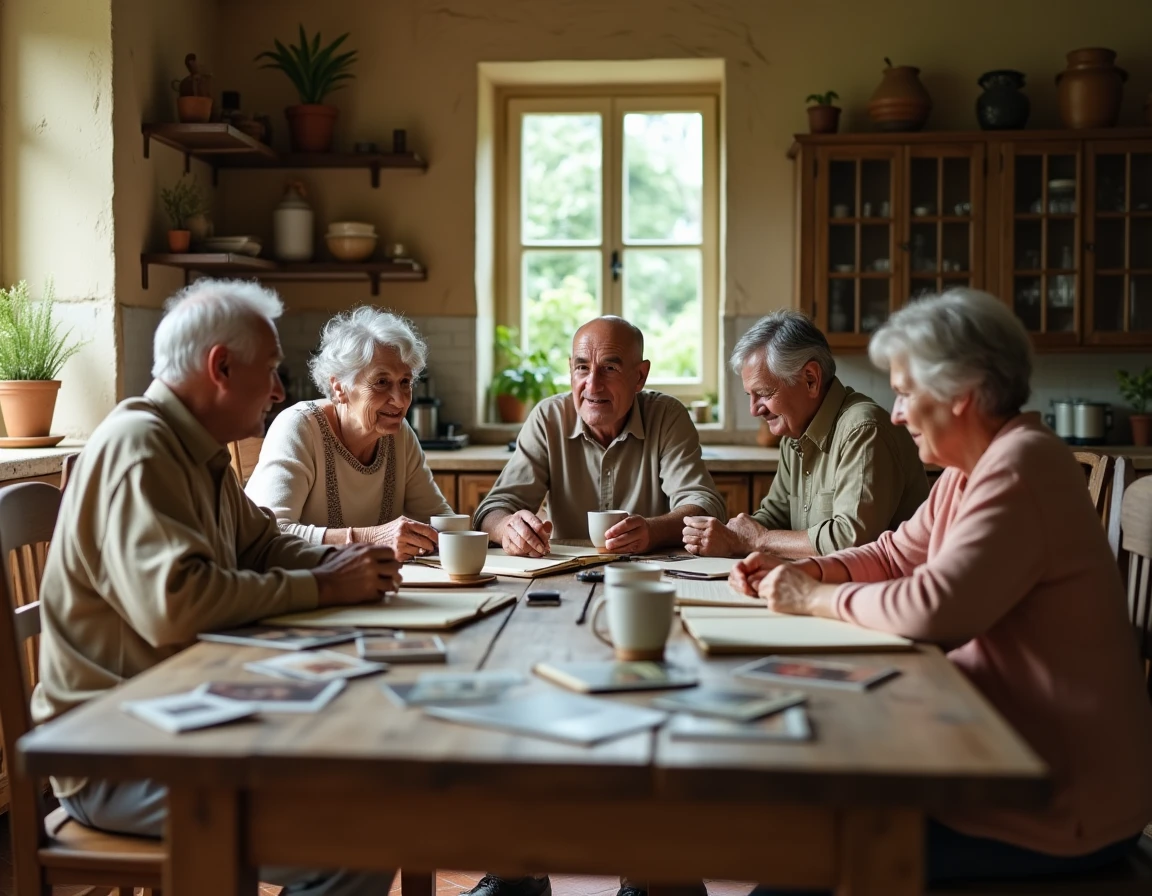
Family values transmitted to the creative project: beyond storytelling
Many brands display “values” on their website. Authenticity, passion, excellence: these words are everywhere and no longer say much. The values that are truly transmitted are reflected in concrete decisions, not in slogans.
Take the question of material choice. A creator whose family practiced a manual trade (carpentry, sewing, gardening) is likely to favor materials they can touch, test, and transform themselves. This physical relationship with the material comes directly from the education received.
What family really transmits to a creator
- The relationship with time: a family that repairs rather than replaces shapes a patient creator, who accepts long cycles of design and production
- The sense of the collective: working as a family teaches delegation, listening to opposing views, and integrating complementary skills into the same project
- A demand for coherence: when the family name is associated with the product, quality is no longer an option but a matter of personal reputation
These transmissions are rarely formalized. They occur through example, through the repetition of daily gestures, through conversations around a table. A creator’s family heritage is built in the ordinary, not in grand foundational speeches.
Heritage house or individual signature: two models of family inspiration
The history of creation shows two distinct trajectories. On one side, houses built on a long heritage narrative, where the founding family embodies the brand over several generations. On the other, creators whose family roots remain intimate, personal, and do not translate into a dynasty.
Van Cleef & Arpels falls into the first model. The founding duo drew from a specific family and cultural context to build a jewelry house whose identity relies on continuity. The brand and the family merge in the narrative.
Christian Louboutin represents the other approach. Born in Paris, surrounded by three sisters, he built his creative universe from a personal fascination with femininity and spectacle. His house carries his individual signature more than a structured family legacy. The family nurtured his sensitivity without becoming the narrative pillar of the brand.

And what about current independent creators?
Contemporary paths often blur this boundary. Anna and Lili Gillet, known as the Métalleuses en fusion, transform metal into jewelry and sculptures from their workshop in Finistère. Their project explicitly relies on sisterhood and Breton inspiration. Family is not a selling point: it is the driving force behind production.
This hybrid model, where the family unit becomes the workshop itself, is found among many artisans. The family then functions as a permanent creative laboratory.
Family inspirations: how to spot them in a creator’s work
Why pay attention to a creator’s family inspirations when purchasing an object or following their work? Because these inspirations help distinguish a sincere approach from a manufactured positioning.
- Look for the recurrence of themes: a creator who consistently returns to the same visual universes (nature, domestic architecture, cooking) is likely drawing from a real family heritage
- Observe how they talk about their process: references to loved ones, childhood places, and inherited objects signal an authentic grounding
- Check the consistency between discourse and product: a creator nourished by their family history produces work that is recognizable from one collection to another
A creator’s family universe does not guarantee the quality of the final product. However, it provides a framework for understanding their choices, evolutions, and the direction of their work in the long term. A creator whose family inspirations are visible and acknowledged offers a rare form of transparency in a market saturated with generic discourse.