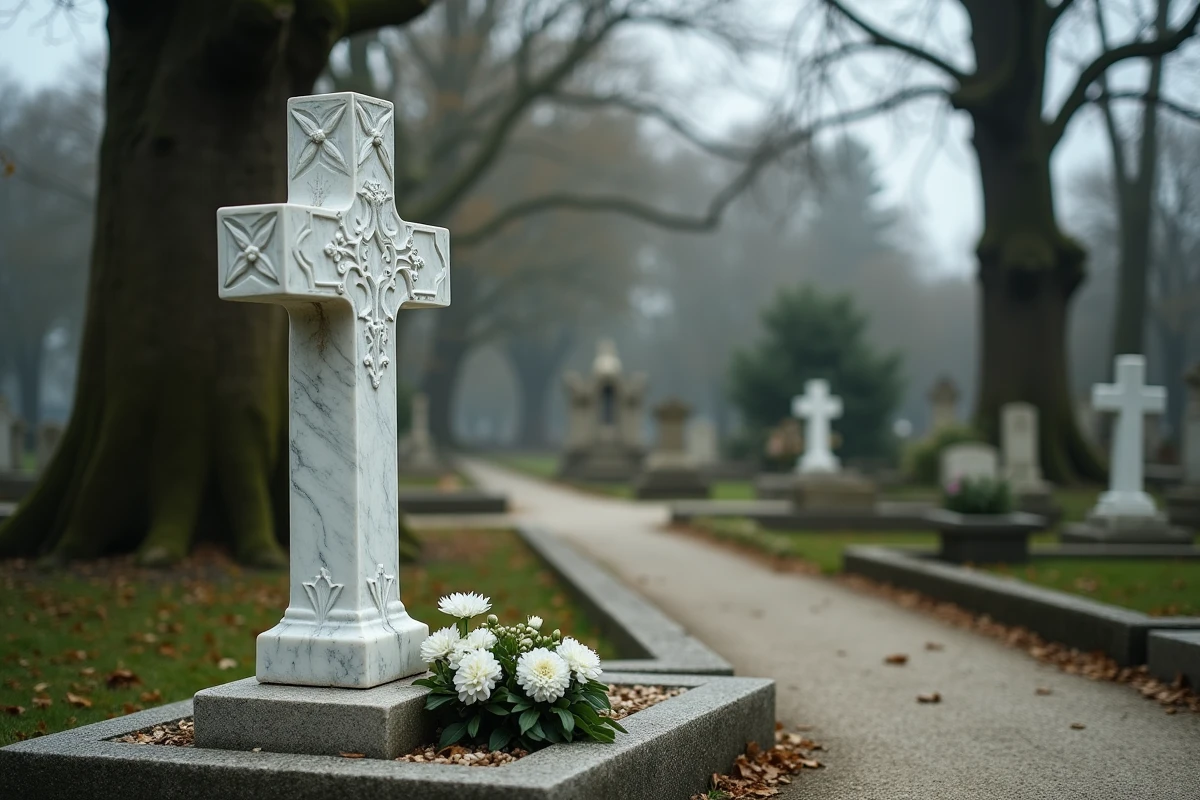
When losing a loved one, the choice of a funeral cross often comes amid dozens of other urgent decisions. The cross remains the most common symbol on French graves, but its selection is not merely a matter of taste. Material, allowed dimensions, method of attachment, cemetery regulations: each parameter impacts the durability and compliance of the ornament placed on the grave.
Funeral Cross and Cemetery Regulations: Check Before Choosing
Did you think a cross can be placed freely on any plot? The reality is more regulated. The funeral cross is not mandatory in France. Its presence depends on the wishes of the deceased, family customs, and, above all, the internal regulations of the cemetery.
Each municipality sets its own rules. Some impose maximum heights, specific materials, or methods of attachment. Others prohibit crosses in specific religious sections or for reasons related to secularism. Before placing an order, a visit to the town hall or a call to the cemetery service can help avoid an incompatible purchase.
The key point to remember: validate the cemetery regulations before choosing any model. A serious stonemason will always ask for this information in advance. If not, it’s a warning sign. To better understand how to choose a funeral cross for a grave, the regulatory question is the real starting point.
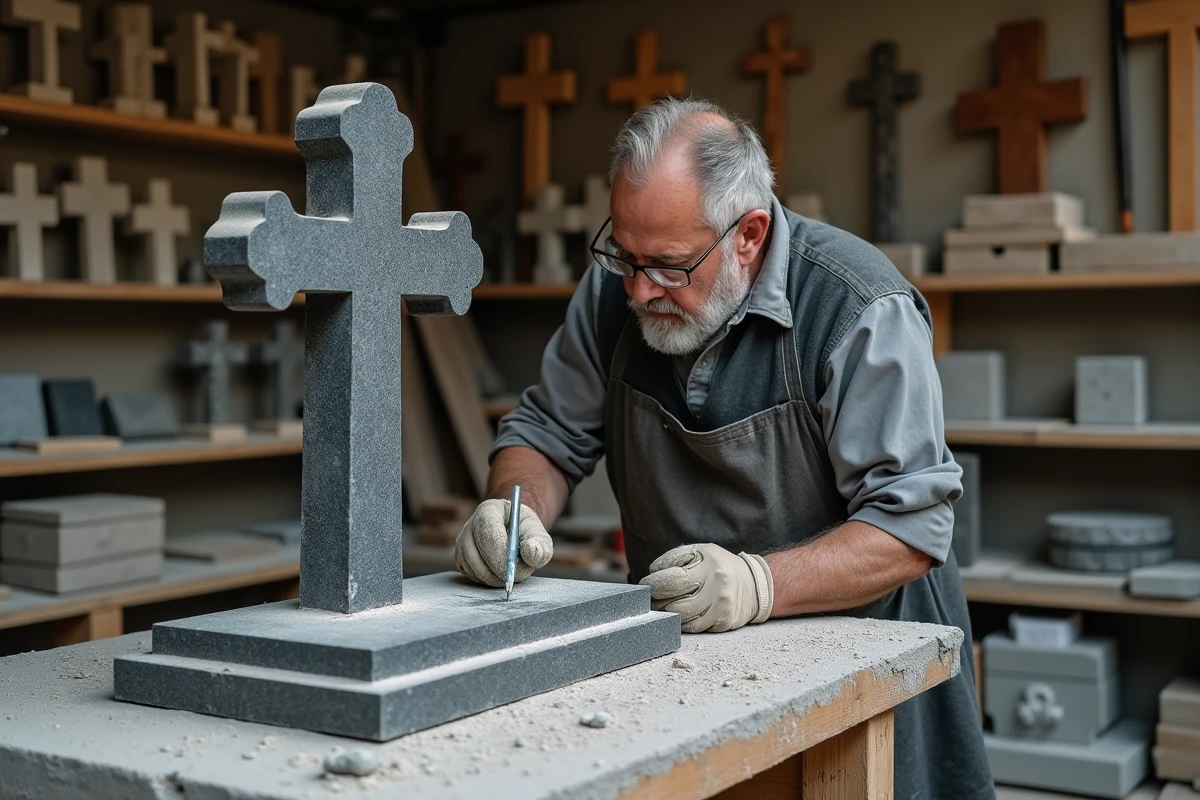
Materials for a Grave Cross: Granite, Stainless Steel, or Wood Depending on the Climate
The material determines the lifespan of the cross, its maintenance, and its appearance over the seasons. Why does this choice matter so much? Because a cross exposed permanently endures frost, rain, sun, and sometimes wind.
Granite and Natural Stone
Granite is the most common material for funeral monuments. It withstands frost well and requires little maintenance. Its density makes it heavy, which necessitates a solid attachment, usually performed by a certified professional. Natural stone (limestone, sandstone) offers a softer appearance but is more sensitive to moisture and moss.
Stainless Steel and Resin
Stainless steel is suitable for humid or coastal regions. It does not rust and is easy to clean. Resin, being lighter and less expensive, allows for varied shapes. However, it does not age as well against ultraviolet rays and may discolor after a few years of exposure.
Wood and Cast Iron
Wood remains a traditional choice, suitable for rural graves or mountain cemeteries. It requires regular treatment against moisture. Cast iron, once common, is becoming rarer. It adds an antique charm but requires periodic rust protection.
Here are the criteria to compare before making a decision:
- The resistance to the local climate (frost, salinity, intense heat) affects the longevity of the chosen material
- The frequency of maintenance that the family can ensure: granite requires annual care, while wood needs treatment every two to three years
- The weight of the cross, which influences the type of attachment allowed by the cemetery and the installation cost
- The visual harmony with the existing monument (color, texture, style)
Attachment and Installation of the Funeral Cross: A Technical Act, Not Decorative
Placing a cross on a grave is not just about setting it on the slab. The attachment must ensure stability in bad weather. A poorly secured cross can topple, crack, or damage the monument.
Several methods exist depending on the support. On a granite slab, attachment is generally done through anchoring or chemical sealing. On a vault, an embedded base may sometimes be necessary. For columbariums or cremation niches, the dimensions are very limited: the cross must fit within a space of a few centimeters, which restricts compatible models.
Some cemeteries require the intervention of a certified professional for any ornament installation. Check this point with the town hall. If installation is free, ensure that the attachment materials (glue, anchors, threaded rods) are suitable for the slab material and the weight of the cross.

Concession Reclamation: What Happens to the Funeral Cross?
This is a topic rarely addressed by guides. When a concession expires and the municipality initiates a reclamation procedure, the ornaments placed on the grave (crosses, plaques, objects) may be removed and retrieved by the family.
However, a request must be made in time. The family must express its desire to retrieve the cross before the reclamation procedure. Once the reclamation is completed, unclaimed items are generally destroyed or placed in a communal ossuary.
In practical terms, this means:
- Monitoring the expiration date of the concession (information available at the town hall)
- Sending a letter to the cemetery service to request the return of the ornaments
- Organizing the physical removal of the cross, sometimes with the help of a stonemason if weight or attachment requires it
This process also has a heritage dimension. Some old crosses made of cast iron or carved stone have artisanal value. Keeping them in the family helps preserve a material legacy linked to the memory of the deceased.
Maintenance of a Grave Cross: Check the Attachment Annually
The installation is not a one-time act. A cross installed on a grave must be inspected regularly. Weather conditions weaken the seals, moss settles on the stone, and corrosion attacks untreated metals.
An annual check of stability and appropriate cleaning for the material is sufficient in most cases. For granite, a damp sponge and a neutral product will do. For wood, a coat of stain or protective oil extends its durability. Stainless steel can be cleaned with clear water, without abrasive products.
If the cross moves when touched or if cracks appear at the base, call a stonemason. Resealing costs much less than a complete replacement. Regular maintenance of the cross, like that of the funeral monument as a whole, is part of the care given to the memory of the deceased over time.