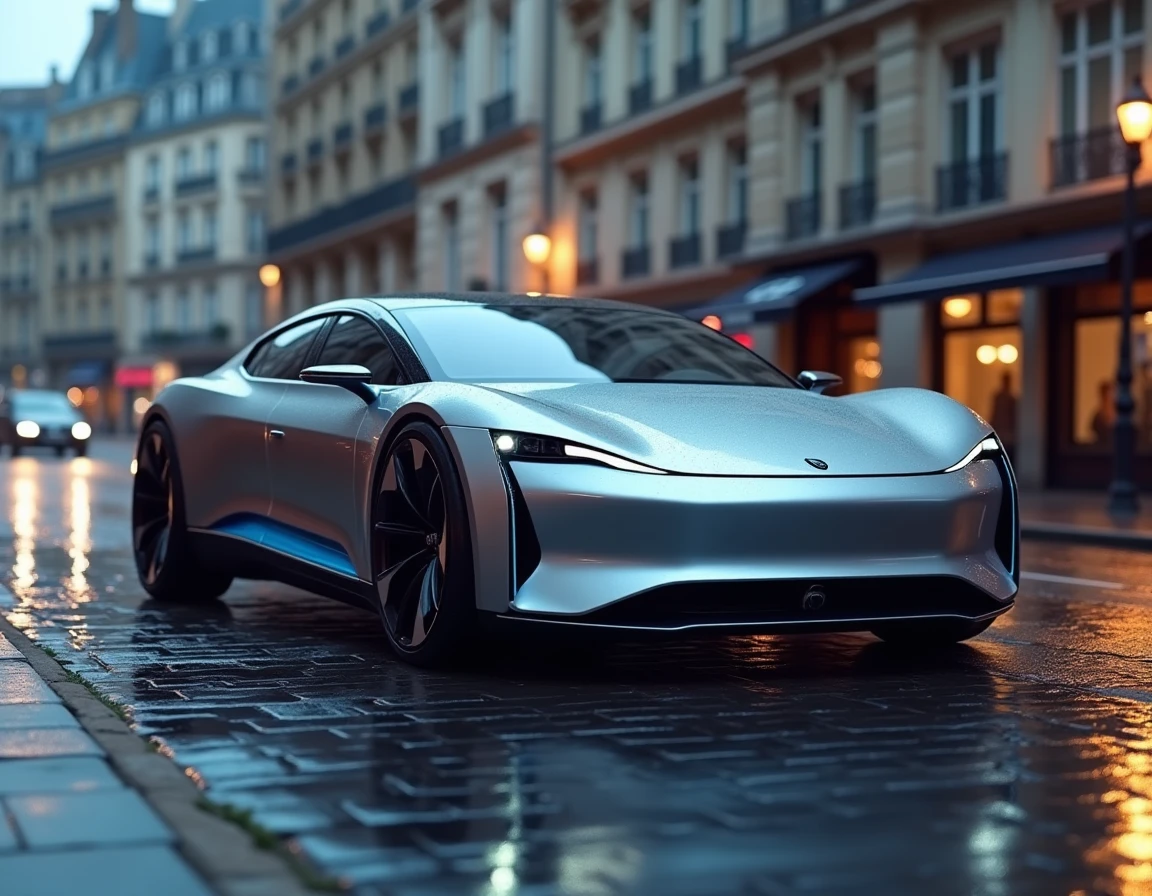
The automotive market has been undergoing a phase of restructuring since 2024, where the certainties of previous years are shattered. The demand for 100% electric vehicles is slowing down in Europe, hybrids are regaining ground, and manufacturers are redirecting their investments towards embedded software. Understanding these movements requires distinguishing between what is a cyclical adjustment and what signals a structural change in the sector.
Software-defined vehicles: the silent shift manufacturers are making
The concept of software-defined vehicle refers to a vehicle whose main functions (driving, comfort, safety) are managed by software layers that can be updated remotely, rather than being fixed in hardware at the factory exit. This concept has been part of marketing vocabulary for a few years, but 2024 marks the transition to industrialization.
Stellantis has formalized its STLA Brain platform with the goal of centralizing the electronic control of its future models. Volkswagen is structuring its subsidiary Cariad to develop a unified operating system. The stakes go beyond simple connectivity: it is about transforming the vehicle into a platform that generates recurring revenue after the sale.
For consumers, this means that the value of a car will depend less on its engine and more on the quality of its software updates. A model for which the manufacturer stops software support could lose functionalities, much like an obsolete smartphone. This parallel is not trivial: it redistributes the very notion of automotive lifespan.
To follow all the news from autofantom fr on Blog Automobile, this type of technological shift is one of the topics regularly analyzed by specialized media.

Slowdown in electric vehicle sales in Europe: causes and consequences
Since the end of 2023, the demand for new electric vehicles has seen a significant slowdown in the European market. Mercedes-Benz, Ford, and Volkswagen have publicly lowered their electric market share targets for 2030. The reasons cited converge: a context of high interest rates that increases financing costs, catalog prices still higher than their thermal equivalents, and a perceived insufficient charging infrastructure in several countries.
This slowdown does not indicate a rejection of electric mobility. It reflects a mismatch between regulatory timelines (the Euro 7 standard, the AFIR regulation on charging stations applicable since April 2024) and the actual financial capacity of consumers. Price remains the primary barrier to purchasing an electric vehicle, ahead of range and charging network.
Manufacturers are responding by diversifying their offerings. Rather than betting exclusively on 100% electric, several groups are repositioning their ranges around intermediate powertrains, paving the way for a strong return of hybrids.
Hybrid powertrains in 2024: why full hybrids are progressing
The non-plug-in hybrid powertrain (full hybrid) combines a thermal engine and an electric motor without requiring an external plug-in. The system recovers energy during braking and assists the thermal engine during high-demand phases. This architecture reduces consumption without imposing a change in usage on the driver.
In 2024, Toyota, Renault (with its E-Tech technology), and the Hyundai-Kia group are experiencing significant growth in hybrid sales in Europe, while registrations of 100% electric vehicles stagnate in some markets. This phenomenon can be explained by several factors:
- The absence of dependence on a charging station, a decisive argument for rural or suburban drivers who do not have a charging point at home.
- A moderate purchase price premium compared to an equivalent thermal model, where an electric vehicle imposes a significantly higher price gap.
- A measurable reduction in consumption in urban cycles, where the electric motor takes over from the thermal engine at low speeds.
This dynamic positions the hybrid not as a transitional technology, but as a sustainable solution for drivers who cannot switch to fully electric under current market conditions.
European automotive regulation: AFIR and Euro 7, two texts to watch
Two regulatory frameworks are shaping the evolution of the automotive sector in Europe for the coming years. The first is the AFIR (Alternative Fuels Infrastructure Regulation), applicable since April 2024, which imposes a minimum deployment of fast charging stations along major roadways for member states. This text aims to remove one of the major barriers to the adoption of electric vehicles: the fear of running out of fuel on the highway.
The second is the Euro 7 standard, which tightens pollutant emission thresholds for new vehicles. Automakers have warned about the industrial impact of this standard, arguing that it requires heavy investments in the depollution of thermal engines even as these powertrains are set to gradually disappear.
What these regulations change for businesses
For corporate fleets, these texts accelerate the reflection on greening their fleets. The total cost of ownership (purchase, fuel, maintenance, taxation) becomes the central criterion for choice. Companies renewing their fleets in 2024 are weighing between hybrid and electric based on the coverage of charging stations on their usual routes.
France has also reformed the ecological bonus, tightening eligibility criteria around vehicles produced in Europe and meeting carbon footprint thresholds at manufacturing. This mechanism directs consumers towards models whose production chain is traceable, penalizing some Chinese manufacturers offering aggressive pricing in the electric segment.
Automotive market in France: what distinguishes the French situation
The French market is characterized by a strong sensitivity to the value-for-money ratio. The Deloitte study on automotive trends highlights that the value-for-money ratio redefines brand loyalty among French consumers. A buyer is less hesitant than before to leave their usual brand if a competitor offers a better-equipped or cheaper model for comparable use.
This volatility benefits Korean manufacturers and some Chinese brands entering the European market with competitive electric or hybrid models. It puts pressure on historical French and German manufacturers, who are forced to justify their prices through service quality, perceived reliability, and after-sales network coverage.
- The most requested connected features in France concern safety (collision alert, rearview camera), well ahead of in-car entertainment.
- Trust in autonomous driving technologies remains limited: the majority of French drivers prefer driving aids that they can deactivate.
- Automotive maintenance services prioritize human contact and transparency regarding pricing, a point that independent repair networks exploit against dealerships.
The year 2024 does not mark a clear break but a measurable shift. The European automotive market is moving at multiple speeds, with consumers increasingly weighing cost, practicality, and regulatory constraints. The manufacturers who will come out on top are those who offer clear ranges, sustainable software support, and prices aligned with actual purchasing power.