A clear swimming pool water relies on a balance between three parameters: water chemistry, filtration, and circulation. When one of these pillars weakens, suspended particles accumulate, algae find a favorable environment, and the pool turns cloudy within hours. Maintaining this balance requires fewer products than one might think, provided one understands what is really happening in the water.
Redox potential and conductivity: indicators that pH alone is not enough to monitor
Most pool owners focus on pH and chlorine levels. These two measurements are necessary, but they only tell part of the story. The redox potential (or ORP, measured in millivolts) indicates the actual ability of the water to oxidize contaminants. A pool can show a correct chlorine level while having low disinfecting power if the pH is too high or if organic matter saturates the available chlorine.
Conductivity, on the other hand, provides information about the overall mineral load of the water. Rising conductivity signals an accumulation of dissolved salts, limestone, or stabilizer. Beyond a certain threshold, the water becomes difficult to balance chemically, and cloudiness sets in even with regular treatment. The only solution then is a partial renewal.
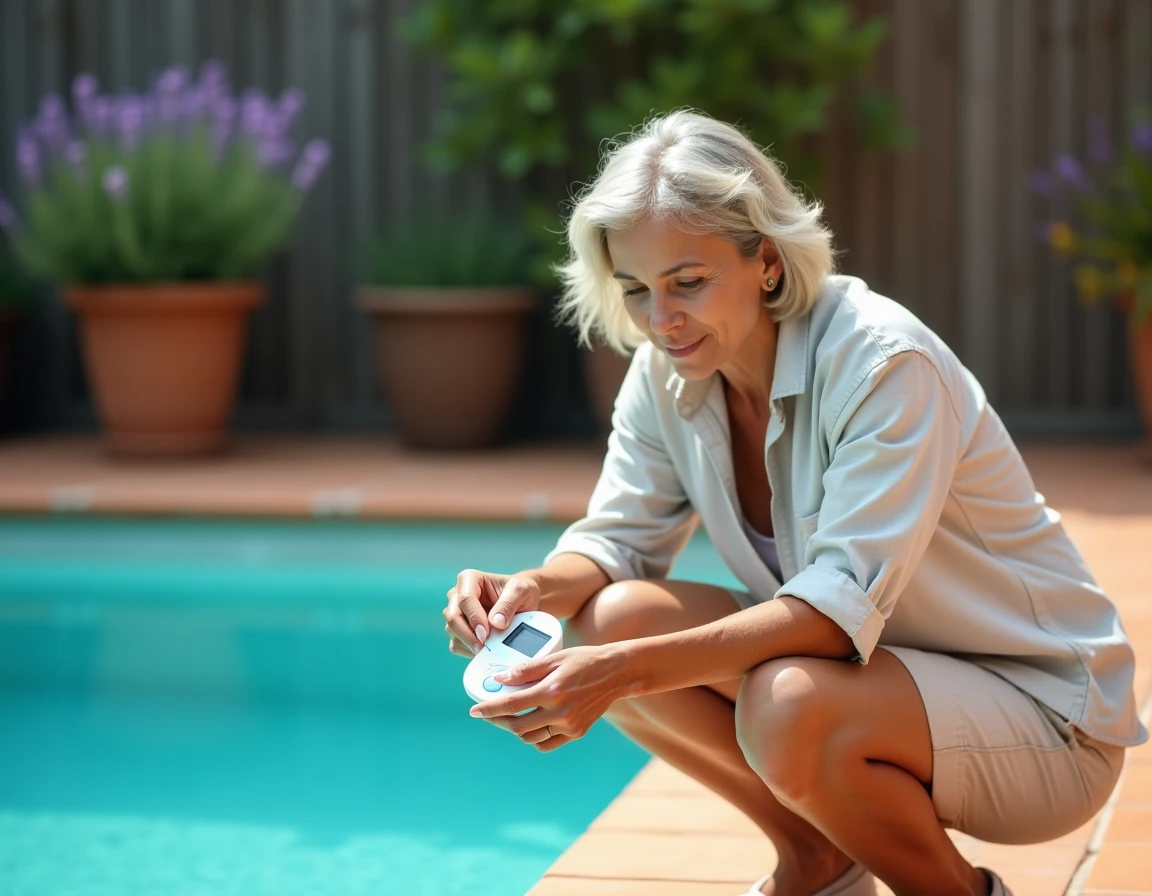
Several manufacturers like Ondilo (ICO probe), Flipr, or EcO now offer connected probes that continuously measure pH, redox, temperature, and conductivity, with alerts on smartphones. This preventive management allows for correcting the water before it becomes cloudy, and reduces chemical doses thanks to very fine adjustments. Finding tips for clear pool water also involves this type of modern equipment.
Filtration and circulation: the technical duo that makes the difference
A clogged or undersized filter is the primary cause of cloudy water in a properly treated pool. The type of filtering media plays a direct role in the fineness of filtration and thus in clarity.
Sand, cartridge, or glass filter: which media for crystal clear water
Classic sand retains the coarsest particles. Filter glass, which directly replaces it in the tank, offers superior filtration fineness and requires fewer backwashes, saving water. The cartridge filter goes even lower in retention fineness and requires no backwashing, only periodic rinsing of the cartridge.
For pools where the water remains cloudy despite correct chemistry, the problem often comes from particles that are too fine for the media in place. Adding a flocculant (liquid or cartridge) clumps these microparticles so that the filter can capture them. With a cartridge filter, the cartridge flocculant is preferable to liquid flocculant, which risks clogging the media.
Variable speed pump and filtration time
A variable speed pump runs longer at low speed instead of operating at full power for a few hours. The result: a constant circulation that prevents dead zones in the pool, reduced electricity consumption, and water that passes through the filter more often throughout the day.
The daily filtration time depends on the water temperature. The commonly applied rule is to divide the temperature by two to obtain the minimum number of hours of filtration. During periods of high heat, filtering at least during the hottest hours limits algae proliferation, as heat accelerates their development.
Shock treatment and recovery of cloudy or green water
When the water has already turned, regular maintenance is no longer sufficient. Shock treatment involves abruptly raising the disinfectant level to destroy the accumulated algae and organic matter. Before applying it, three checks are essential:
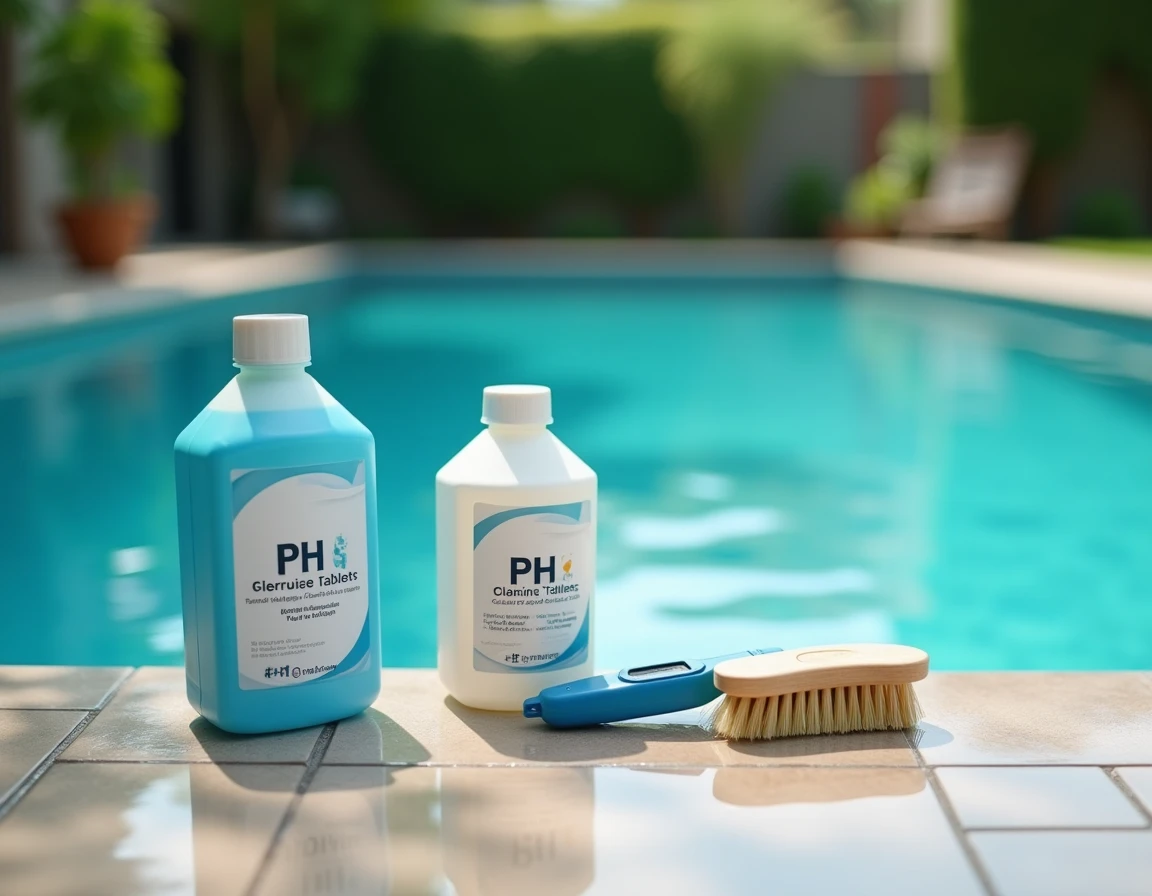
- Measure the pH and bring it between 7.0 and 7.4. A shock chlorine in high pH water loses most of its effectiveness.
- Clean the filter before treatment, not after. A saturated filter will not be able to remove dead algae and debris released by the shock.
- Brush the walls and bottom of the pool to dislodge the algae biofilm before adding the product. Without this brushing, the disinfectant does not reach the colonies attached to the surfaces.
After the shock treatment, filtration must run continuously until the water regains its clarity. Adding an algaecide after the shock prevents rapid recolonization. The flocculant comes in last, once the algae are destroyed, to clarify the suspended residues.
Reduce chemical treatments through daily prevention
The most effective approach to keeping water clear is to limit the input of contaminants before they become a problem. A few habits significantly change the stability of the water:
- Covering the pool with a bubble cover or roller cover reduces evaporation, limits pollen and dust deposits, and maintains temperature, extending the lifespan of the water without renewal.
- Regularly emptying the skimmer baskets and the pump pre-filter prevents organic debris from decomposing in the circuit and consuming free chlorine.
- Rinsing feet before swimming decreases the introduction of sunscreen, sweat, and dirt, three factors that quickly disrupt water chemistry.
The current trend in private pool maintenance is towards resource-saving logic. Extending the lifespan of pool water, reducing filter backwashes, and adjusting product doses as precisely as possible allow for a balance between clear water and responsible consumption. Connected probes fit into this logic: they detect a drift before it becomes visible to the naked eye, avoiding heavy curative treatments.
Clear pool water is not the result of a single spectacular action, but of a series of regular micro-adjustments. The appropriate filter, the cover placed every evening, the pH checked twice a week: these discreet reflexes make the difference between a clear pool and one that ends up being treated in an emergency.