In cooking, precision is key; a slight variation in measurements can turn a delicate pastry into a disaster. For chefs and culinary enthusiasts, mastering conversions between volume measurements (liters, cups, tablespoons) and weight measurements (grams, ounces) is an essential skill. This ensures the success of recipes, especially those that require scientific accuracy, such as baking. Understanding how to measure dry and liquid ingredients correctly, and knowing when to prioritize a kitchen scale over a measuring cup can make the difference between a memorable dish and a culinary failure.
Mastering Measurements in the Kitchen: Understanding the Basics
In the arsenal of skills required to obtain a CAP cuisine or CAP pâtissier, mastery of units of measurement and their conversion holds a prominent place. These units, which may seem trivial, are the universal language of essential recipes and technical sheets. Therefore, learn to juggle grams, milliliters, cups, and tablespoons; your precision depends on it.
Approach volume and weight equivalences seriously. A conversion from ml to g is not a trivial operation, as it underpins the correct proportion of ingredients. Consult conversion tables to avoid transcription errors that could lead to unpredictable culinary results. These visual aids are indispensable companions for anyone wishing to follow recipes to the letter or adapt preparations to specific constraints.
Candidates for the CAP exam, whether aiming for a career in cooking or pastry, must integrate this notion: cooking is an exact science. The units of measurement are not mere indications; they are the fundamental components of successful dishes. French culinary specialties, renowned for their finesse, require unwavering precision in measurements.
Consider the international context of our gastronomy. Practicing French cuisine abroad involves perfect mastery of unit conversions, as standards can vary from country to country. The ability to adapt measurements to different systems is an asset for chefs who aspire to carry our culinary heritage beyond borders.
Techniques and Tips for Accurate Measurements
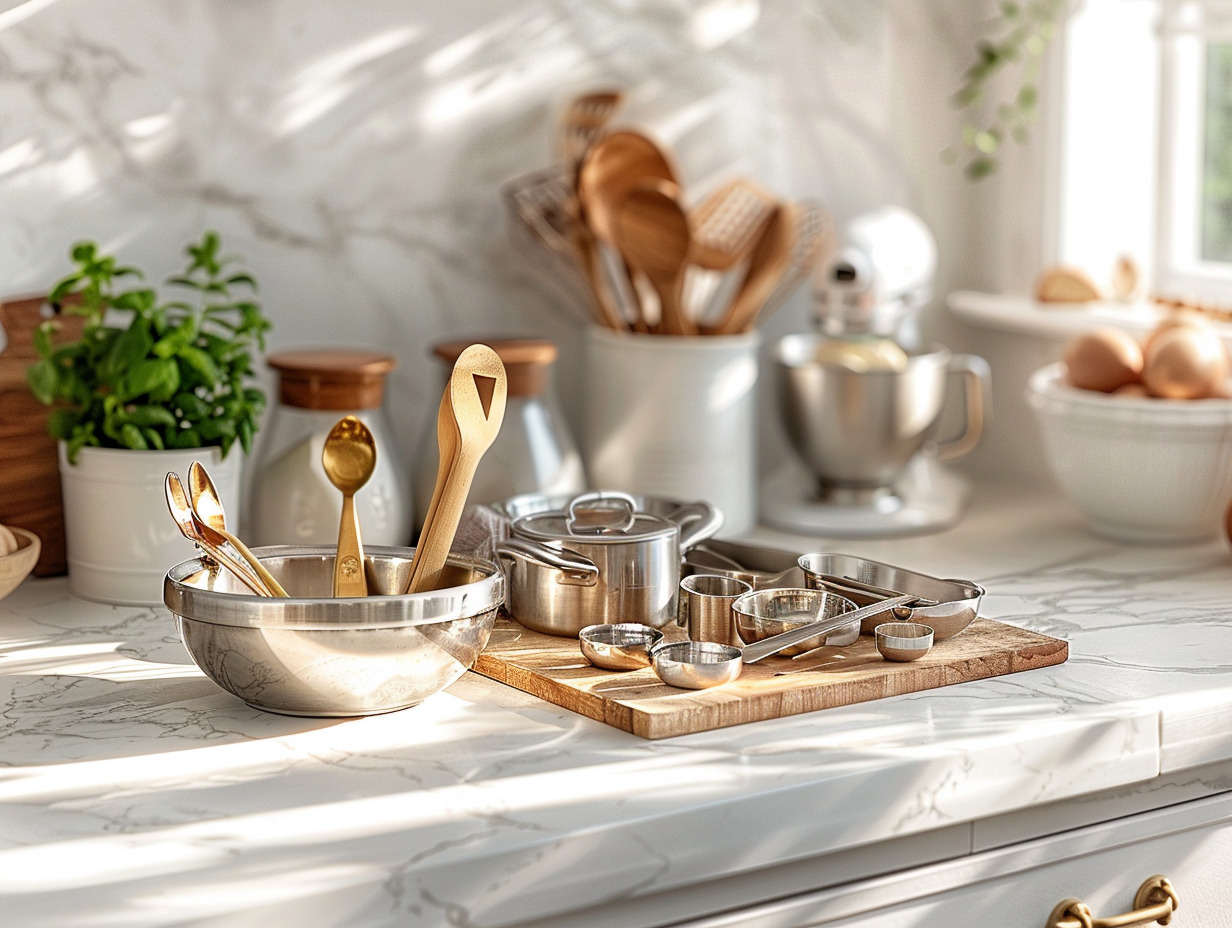
Precision is the cornerstone of success in the kitchen. To achieve this accuracy, equip yourself with a measuring cup and measuring spoons. These tools allow you to measure liquids in milliliters and centiliters with great accuracy, essential in recipe formulation. When handling dry ingredients, such as flours or sugars, a digital kitchen scale is indispensable for converting centiliters to grams with unwavering reliability.
Professionals, whether they are kitchen assistants or Michelin-starred chefs, and those aspiring to open their own restaurant, know that every gram counts. For this reason, conversion tables are reference tools. They allow you to navigate between measurement systems, converting cups to milliliters or teaspoons to centiliters. Remember that recipes can vary depending on the type of ingredient: a cup of flour does not weigh the same as a cup of powdered sugar.
For those considering taking French cuisine abroad, knowledge of conversions between measurement systems is fundamental. Online training can offer modules dedicated to this skill, enriching the expertise needed internationally. Temperature equivalences, for example, are often a headache when converting from Celsius to Fahrenheit, or from the metric system to the imperial system. Master these conversions to ensure a reputation for quality and precision, regardless of the geographical context.